Stable on Click Day
Even when all families arrive at once, registration stays available.
Associations, federations & consortia
A portal in which parents register their children for the projects of the Fly youth centre and apply for membership, stable even on Click Day.
juzefly.it ↗ (external link)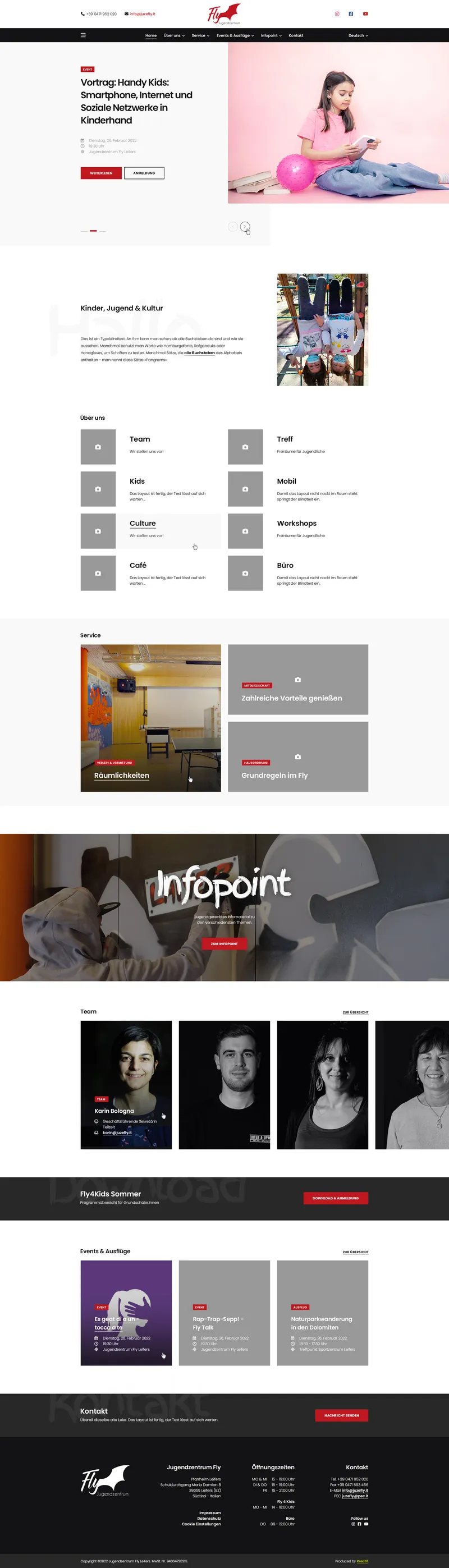




One account for the family, with children, authorised pick-up persons and consents.
Parents apply for membership online, and the team approves it.
Choose weeks, add extra options and see the price straight away.
If a week is full, the child goes on the waiting list and moves up when a place frees up.
Projects, registrations, payments and members in one place, with Excel export.
When registration opens, the portal switches to more powerful servers.
The Fly youth centre looks after many children and young people in Laives, in various projects throughout the year. For the summer projects in particular, a very large number of families register within a short time, often for several weeks and several children.
Every registration comes with details that have to be right: who is allowed to pick the child up, what to bear in mind regarding allergies or illnesses, whether photos may be published and whether the membership has been paid. Until now, registrations and memberships ran through several online forms. The team then had to laboriously evaluate, merge and rework the responses, and they did not stay up to date on their own. And this is sensitive data: health information as well as the question of who may pick up a child when parents live apart or are in dispute.
Then there was Click Day. When registration for the summer projects opens, a very large number of families want a place within the same few minutes. In previous years the servers collapsed under this load, and families could no longer get through.
Even when all families arrive at once, registration stays available.
Children, authorised pick-up persons and consents apply to every registration.
Whoever comes first gets the place, and everyone else goes on the waiting list.
Before submitting, parents see what the registration costs with all extras.
Who is registered, who has paid and who is still missing, at a glance.
Sensitive data protected, consents verifiable, pick-up clearly regulated.
Kreatif built a dedicated portal with two areas: one for parents and an administration area for the youth centre team. Parents see only their own family; the team sees everything and, when questions arise, can view the portal from a family’s perspective.
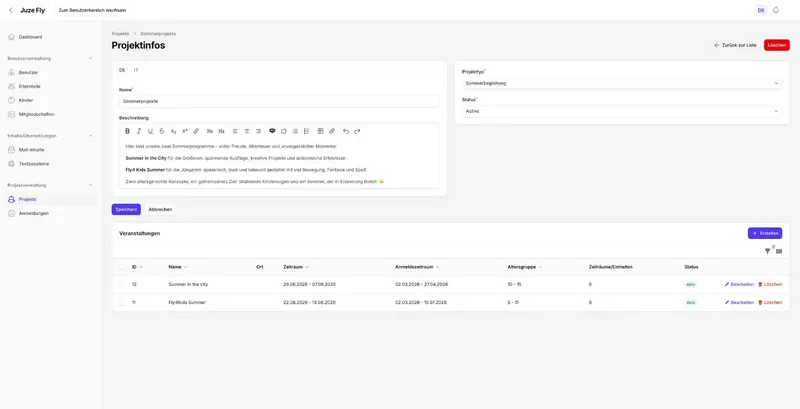
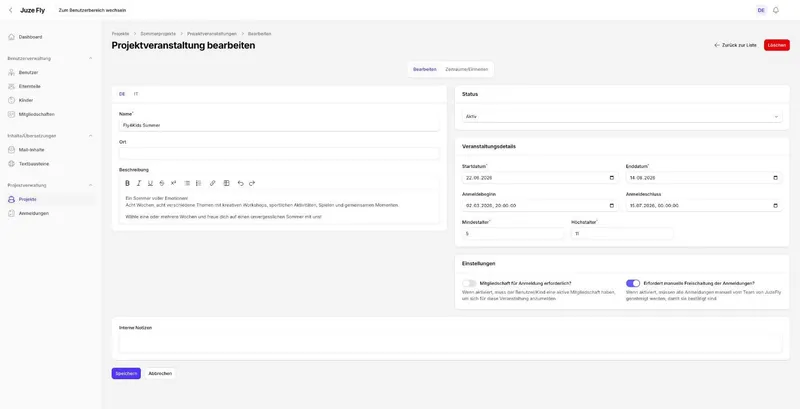
Existing members received an email invitation and completed their profiles themselves instead of entering everything again. Each project consists of events with periods, prices and places, and for each event the team can decide whether registrations are valid immediately or need its approval first.
For Click Day, Kreatif designed the portal for high load. It runs on scalable infrastructure that switches to considerably more powerful servers when registration opens, and the database is also set up for many simultaneous requests. This keeps registration available when all families arrive at once.
Because the youth centre manages sensitive data, legal compliance was part of the planning from the start. Apart from the parents, only the team can see health information, and every consent to photos and terms is stored with a timestamp. Each child’s record shows who may pick them up. Especially in family disputes, the team therefore knows for certain to whom it may hand over a child. For this reason the portal also obtains the consent of both parents: membership can only be applied for once both have set up their accounts and given their consent. A parent with sole custody confirms this explicitly.
Payment is deliberately not handled online. Families pay the membership fee and projects in cash or by bank transfer, and the team records the payment in the system.
All data on families, children, memberships and registrations originates in the portal.
Work began in August 2025, and in January 2026 the portal went live with memberships. February brought memberships for adults and the extra options, and at the beginning of March registration for the summer projects opened. Since then Kreatif has been developing the portal further together with the team.
Parents create their account or complete it via the invitation. They enter their children with tax code, health information, authorised pick-up persons and consent to photos. Both parents manage the same child and both give their consent, and young people can also register themselves.
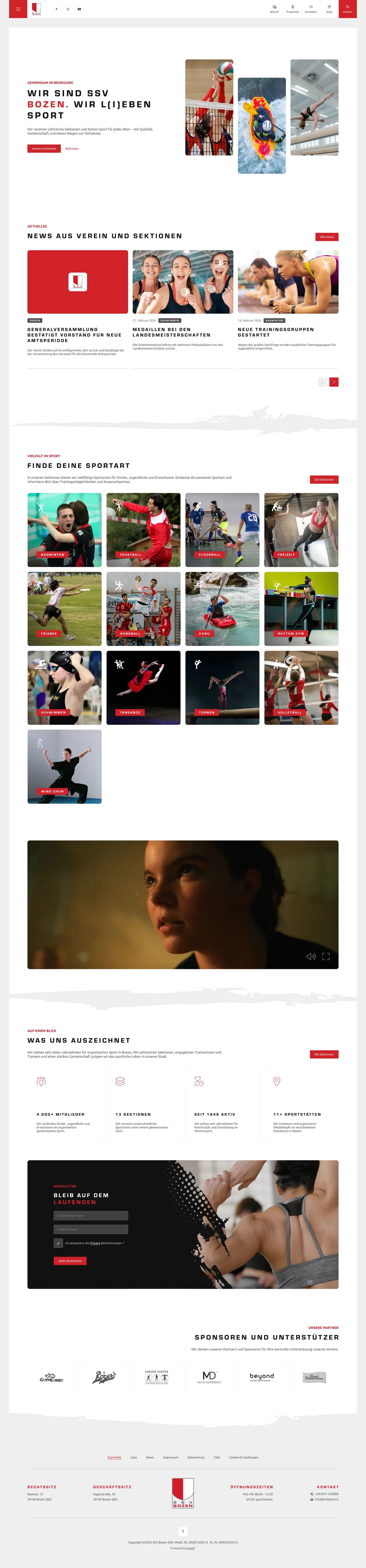
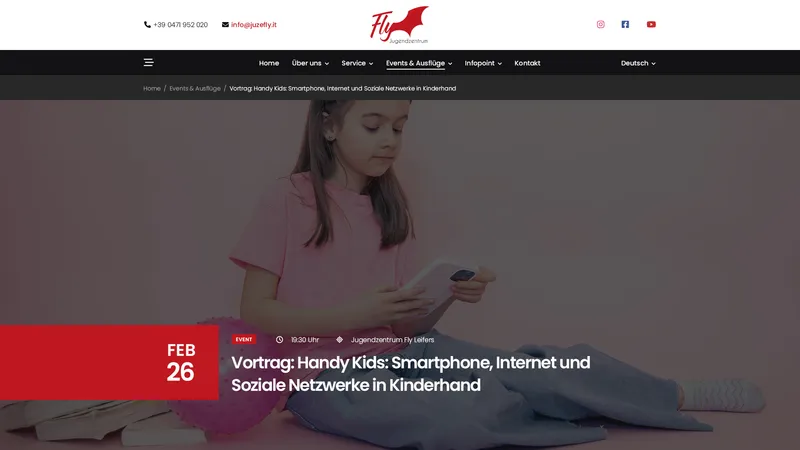
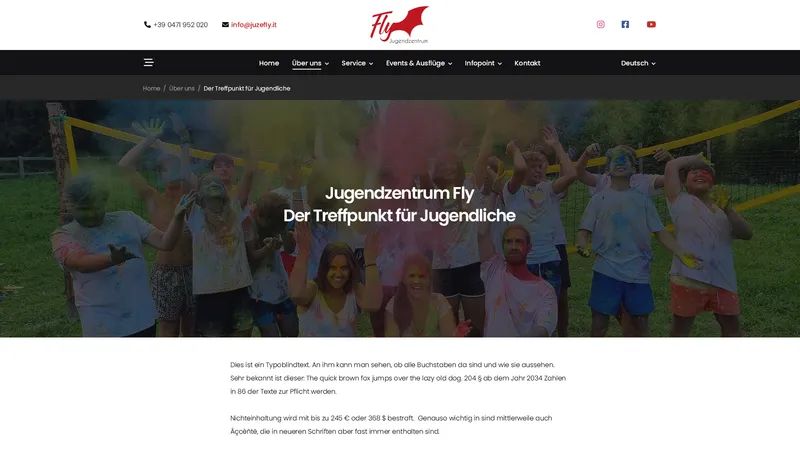
The website shows the monthly programme, events and excursions with registration, and presents the Treff drop-in centre, Fly 4 Kids, workshops, the infopoint and the team.
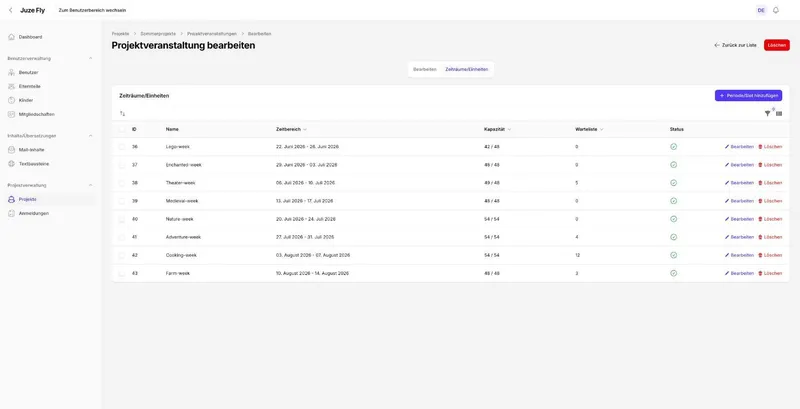
Parents see all projects and their events, with age group, price and available places per week. A wizard guides them through registration: choose a child, tick the weeks, add extra options, accept the terms. The price is updated as they go.
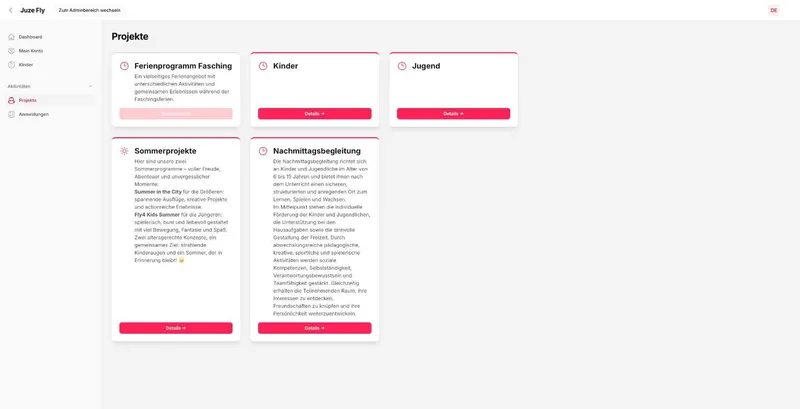
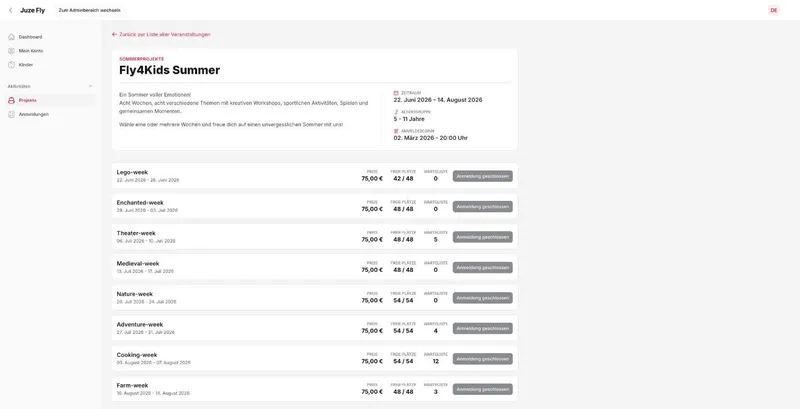
The team creates projects and events itself, with registration period, age group and places per week. It records payments directly on the registration, and after the project the certificates of attendance go out to all families.
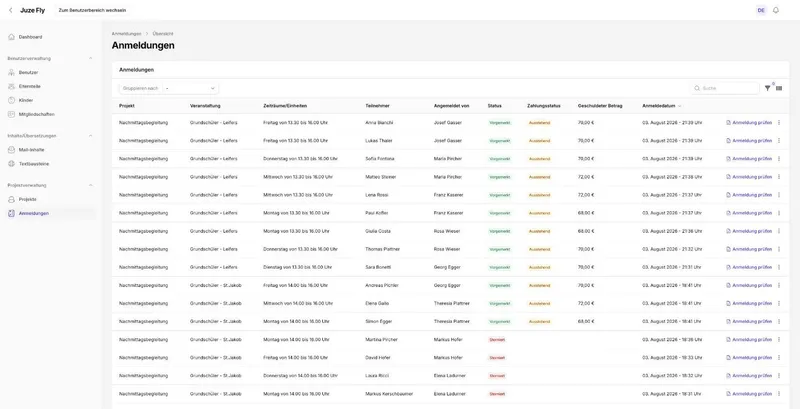
When a week is full, further registrations go on the waiting list; when a place becomes free, the next child moves up automatically, without anyone having to step in. If needed, the team approves each registration individually.
In the first year, around 600 parents created an account and entered just under 400 children. Almost 390 memberships and over 1,200 project registrations went through the portal.
Click Day 2026 went off without a hitch. Kreatif monitored it live, and the servers handled the rush without any problems, unlike in previous years.
Families register their children whenever it suits them and see immediately whether a place is available and what the registration costs. Demand for the summer projects was so high that several weeks were allocated via the waiting list, in a way everyone could follow.
The team has registrations, payments and members in one place. Authorised pick-up persons, health information and consents are on record for every child and documented verifiably. When someone turns up at pick-up time, the team can see immediately whether that person may take the child home.
 Case study
Wineries & distilleriesRetail & e-commerce
 Case study
Crafts & servicesRetail & e-commerce
 Case study
Crafts & servicesTourism & hospitality
 Case study
Associations, federations & consortia
 Case study
Crafts & servicesRetail & e-commerce
 Case study
Associations, federations & consortiaTourism & hospitality
 Case study
Associations, federations & consortia
 Case study
Crafts & services
 Case studyUnder Construction
Associations, federations & consortiaWineries & distilleries
 Case study
Associations, federations & consortiaCrafts & services
 Case study
Wineries & distilleriesRetail & e-commerce
 Case studyCentra
Crafts & servicesAssociations, federations & consortia
 Case study
Tourism & hospitality
 Case study
Industry & manufacturing